News
Members in Focus: Five members of The Three Lions’ backroom staff reflect on a special World Cup summer
25 September 2026
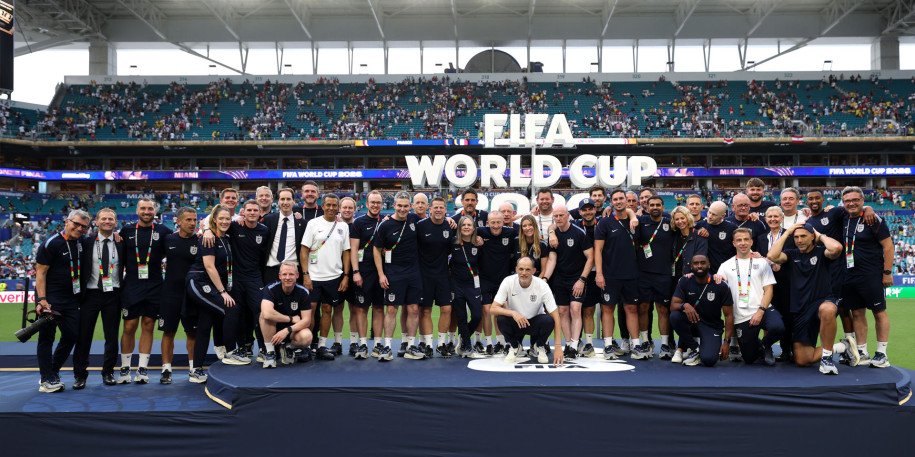
On Saturday evening, World Cup bronze medallists England host champions Spain at a sold-out Wembley Stadium in the UEFA Nations League. Ahead of the game, five women who contributed to the Three Lions’ success in the US and Mexico have kindly offered to provide a fascinating insight into their respective career journeys, current roles, responsibilities and challenges.
For WIF members interested in what it takes to work at major tournaments, each of the five women also shares a personal message of advice, for those aspiring to follow in their footsteps.
Emily Webb – England Senior Men’s, Lead Team Manager
Tell us about your career journey, and the route that you took into your current role? My career has taken a few different turns to get to the role I’m in today, but interestingly all within football! I’ve spent the last 18 years working in a football environment, but the start of my journey was very different to the one I’m in now.
Fresh out of university in Southampton, I managed to get a part-time role working in the hospitality department on matchdays at the stadium. This eventually evolved into a full-time sales role, selling perimeter board space and hospitality boxes for the club; a lot of cold calling! I eventually moved over to the training ground as a Scouting Administrator and ended up as the Academy Secretary for about five years, responsible for all off-field administration, including player registration for the academy boys which I really enjoyed.
In 2016 I joined the FA as a Team Manager, working with England men’s youth teams, travelling to South Korea, Romania, Greece, Spain and a whole host of different countries. After six months I was lucky enough to get a role with the seniors, looking after the team and as PA to the England Manager, which eventually developed into the lead role I am in today.

What was your role at the World Cup and how do your duties differ on a non-match day, compared to a game day? For a major tournament, I oversee all of the operational planning and logistics, starting from around two years out from the start of the tournament. This will include lots of visits to the host country (or countries), seeing every stadium, hotel and training ground for every possible route through the tournament we could face, and identifying and securing a basecamp for the team.
My role involves a lot of off-field regulation and understanding of the vast rules and regulations of the tournament. We ship out close to 50 tonnes of kit for each tournament so managing this process with the team and working closely with our brilliant suppliers that love to be involved in tournament planning is key.
On a matchday, my role is much more focused, ensuring the right environment for the team, getting the team sheets submitted, ensuring we all arrive on time and making sure everything is set up correctly at each of the venues. On a non-matchday my focus looks a lot further into the future, whether that be the next week or planning for Euro 2028. Early-stage discussions for the World Cup in 2030 have also already started.
What was your standout moment from the tournament? My standout moment will have to be the Mexico game. We anticipated such a high level of challenge and hostility, yet when we arrived, the welcome and pure love for football just came across. The whole bus was covered in white foam as we arrived and the atmosphere at the Azteca from start to finish was incredible. I was six months pregnant at the time and thought I could have given birth in the stands with the excitement and frenzy in the game; there are even shouts I should name my baby Azteca instead!
What was the biggest challenge you faced, and how did you overcome it? I think the biggest challenge we face with the seniors is the number of stakeholders, internal and external that are involved. We’ve got the players, team staff, working staff, VIPs, suppliers, UEFA, FIFA, friends and family and so many groups we need to involve.
Describe your World Cup experience in three words. Proud, privileged and unforgettable.

With the world champions Spain coming to Wembley on 26 September, what differences do you see (if any) in your deliveries for a 'home' match, compared to being on the road? I think the focus for Spain will be to get the best result we can to ensure a great start to our Nations League campaign.
What would you say to other women who aspire to work at major international tournaments? Major tournaments can feel intimidating, particularly when you’re working at such a fast paced, high-pressure environment but it is by far the most rewarding work that I have been involved in. It shows how much you can achieve when you trust your instincts and abilities to put yourself out there.
Joanna Manning-Cooper – Director of Marketing, Communications, Corporate Affairs and International Relations
Tell us about your career journey, and the route that you took into your current role? My two big passions in life are news/current affairs and sport, and I am so lucky to have built a career in both industries over the last 30 years. I’ve worked for two incredible media brands, in senior roles – Global Communications Director at the Financial Times and Corporate Affairs Director at Sky. Working at the heart of a news organisation was fascinating. But my passion for sport won in the end, and I started in sport in 2006, working for LOCOG (London 2012 Olympics and Paralympics) as Head of Media Relations. It was an incredible six years and when I left after the Games at the end of 2012, I knew I wanted to stay in sport.
My next role was with the Rugby World Cup, joining in 2013 as Director of Marketing and Communications. This became my third big professional passion, ‘joining up’ marketing and communications and delivering truly integrated campaigns in the digital era. A similar role with the RFU followed, again as Director of Marketing, Communications and Digital, and then, after a really interesting and fulfilling time at Sky which included membership of the Sky Sports Executive Leadership team, I joined the FA four years ago in my current role as Director of Marketing, Communications and Public Affairs. I also have responsibility for digital content and for international relations. It is hugely busy, but endlessly motivating and fascinating.

What was your role at the World Cup and how do your duties differ on a non-match day, compared to a game day? My role is to lead our talented and hard-working marketing, communications, digital content, public affairs and international relations team during the tournament. This includes our England Supporters Travel Club team who look after our brilliant England fans during the tournament. Some of my team are embedded in camp with the players and technical staff, and the majority are based at Wembley.
We run a 24/7 operation, given the time zone challenges, delivering a campaign to connect the team to the nation. The objective is the same on match day and non-match day – we want to get the country behind the team and tell our story to all our key audiences and stakeholders. While the tactics change from match day to non-match day, the objectives and strategy are the same.
What was your standout moment from the tournament? Mexico v England in the Azteca Stadium. A career highlight. I will never forget the Lions of the Azteca.
What was the biggest challenge you faced, and how did you overcome it? The travel and time zone challenges were tricky and tiring, but we planned for it and knew what to expect.
Describe your World Cup experience in three words. Memorable, challenging, motivating
With the world champions Spain coming to Wembley on 26 September, what differences do you see (if any) in your deliveries for a 'home' match, compared to being on the road? Our objective is the same, home and away. We want to tell the England team’s story and connect the team to the nation. My team market and sell the tickets, and selling out Wembley is never something we take for granted. The Spain game is already a sell-out.
What would you say to other women who aspire to work at major international tournaments? The opportunities are there. Work hard, be a team player, and make it about ‘we not me’.
Anna Bush – Media Operations & Events Lead
Tell us about your career journey, and the route that you took into your current role? I have worked at The Football Association for nearly 20 years, starting in the International Relations team, and moving across to the Communications team. I studied at Bournemouth University and achieved a 2.1 in a Public Relations degree. Over the years, I have had several promotions within the organisation. Currently my position is Media Operations & Events Lead, working predominately with the England men’s senior team.

What was your role at the World Cup and how do your duties differ on a non-match day, compared to a game day? I was one of three team media officers during the tournament, however we all had slightly different roles. I led on the operations of the England media centre for the team day-to-day, as well as organising two player training community sessions during the tournament, and post-match player interviews on matchdays.
What was your standout moment from the tournament? Bringing a medal home and making history.
What was the biggest challenge you faced, and how did you overcome it? Finding a location for the media centre and organising the logistics of it ‘virtually’ due to costs, with only one in-person site visit. Building up relations in the (United) States was key to the success and implementation of the plans and delivery.
Describe your World Cup experience in three words. Togetherness, history, hope.

With the world champions Spain coming to Wembley on 26 September, what differences do you see (if any) in your deliveries for a 'home' match, compared to being on the road? Wembley is familiar surroundings, whereas we had to think on our feet during the tournament, coming up with quick solutions when issues arose under scrutiny, pressure and in a high-profile environment.
What would you say to other women who aspire to work at major international tournaments? As a working mother of two boys, I am immensely proud I have gone to seven major international tournaments, my first being in 2012 (Euro Poland-Ukraine). Anything is possible if you work hard and believe in yourself!
Ruth Corry - England Senior Men’s Team Manager
Tell us about your career journey, and the route that you took into your current role? My career in football stems from me playing football when I was younger, which then naturally led me into coaching. From the age of 16 to 21, I coached part-time at my local club, Gillingham FC, whilst I was studying.
After university, I began my full-time career as a qualified secondary school PE teacher. I then had the opportunity to move into football operations at Arsenal Academy, where I spent four years as Football Operations Manager. That was a valuable experience and gave me a strong grounding in the operational side of the game.
From Arsenal, I moved to Charlton Athletic, where I spent six years as Head of Business Operations.
In 2022, I joined The FA as Senior Men’s Team Manager, which was an exciting next step in my career and gave me the opportunity to work at international level. Joining ahead of the World Cup in Qatar was particularly special, as it was my first experience of working at a major international tournament.

What was your role at the World Cup and how do your duties differ on a non-match day, compared to a game day? My role was focused on the operational delivery of the team throughout the tournament (working alongside Emily Webb, our Lead Team Manager) making sure that everything around the team ran as smoothly as possible and that the players and staff could focus on performing.
There is quite a significant difference between a non-match day and a game day. On a non-match day, there is much more focus on planning, logistics and preparation, making sure training, travel, meetings, schedules and all the different requirements of the team are coordinated.
On a match day, everything becomes much more time critical. There are a huge number of moving parts, and the focus is on making sure the team gets to the stadium, through all the necessary processes and onto the pitch exactly when they need to be. You have to anticipate issues before they happen and be prepared to react quickly when something unexpected comes up.
What was your standout moment from the tournament? Probably two, for very different reasons. The first was the team arriving at basecamp. That felt particularly emotional for me because there had been such a long journey to get to that point. There were two years of work involved in helping to source the basecamp, followed by another year of planning and preparation. That all culminated in the five-day ‘basecamp build’, which was arguably the most stressful period of the tournament for me!
It was organised chaos, managing more than 40 people to deliver what was ultimately an outstanding hotel and training ground environment for the team. So, after all that planning, seeing the team buses finally pull up, with the Kansas City Chiefs marching band playing in the background, was a really proud moment. It was one of those occasions where you could step back for a second and think, we've actually done it.
The second would be the night at the Azteca. I imagine that answer would be the same for a lot of people who were there. The drive to the game, the thunderstorm, the delay, the incredible atmosphere and then the tension of the game itself, it really had everything.
It was an extraordinary experience, although I'm not sure my stress levels would like to live through it again! But it's definitely a night I will never forget.
What was the biggest challenge you faced, and how did you overcome it? I would say the biggest challenge was the build-up to the tournament, right up until the team arrived in Kansas.
There were two years of site visits, basecamp planning, logistics planning (including getting seven sea-freight containers over to the US!). There were so many moving parts, and a huge amount of work went into trying to make sure that once the team arrived, everything ran smoothly.
We work so well as a Team Operations group, alongside all the other departments, and everyone plays their part in making sure things are planned right down to the smallest detail, so the team has the best environment in which to perform.
Delivering the operations and logistics for a major tournament is certainly not a job you can do on your own. It takes a huge amount of teamwork, trust and communication, and I think that's one of the things that makes these experiences so rewarding.
Describe your World Cup experience in three words. Memories for life.

With the world champions Spain coming to Wembley on 26 September, what differences do you see (if any) in your deliveries for a 'home' match, compared to being on the road? Being at Wembley, and at our London base at Tottenham, really does feel like being at home.
So, many things become easier as they are routine. We know the environment, we know how things work and, importantly, it's an environment that we have much more control over and can set up exactly how we want it.
When you're on the road, there are obviously more variables, and you must adapt to a new environment, new facilities and different logistics. At home, there is a familiarity and consistency that allows you to focus more on the detail and on delivering the best possible environment for the team
What would you say to other women who aspire to work at major international tournaments? If you have the opportunity to work at a major tournament, do it. I have now been fortunate enough to work at three major tournaments, and they have all been career highlights for completely different reasons. You create memories that last a lifetime, you're challenged professionally in ways you probably couldn't replicate elsewhere, and, if you're lucky, you get to see the team achieve a result from something that you've been working towards for two years.
It's a huge amount of work, but it's incredibly rewarding. And I think that's what makes these tournaments so special - you get to be part of something much bigger than your individual role and work alongside an amazing group of people to make it happen.
Suzanne Scott - England Senior Men’s Movement Coach & Lecturer in Anatomy and Movement at the University of Bristol
Tell us about your career journey, and the route that you took into your current role? My route into professional sport came about more or less by chance. I was asked to deliver the Pilates based training programme I had developed to backroom staff at Bolton Wanderers FC, which led to opportunities to work at other clubs and, eventually, my role with England. After a few years of teaching, I decided to return to university to study anatomical science and a PhD in exercise physiology, which have helped me in the role I have with the senior men’s team, and I now combine a part-time academic career with team sport consultancy.

What was your role at the World Cup and how do your duties differ on a non-match day, compared to a game day? I support the MDT (multidisciplinary team), which in practice means being in the gym to help with pre-training (both group and individual) and also after training, when players may request extra mobility or core work, or if they have a specific focus related to performance that they are working on. On match day, players are given space to be more self-directed. There will not be an emphasis on a structured group prep, for example, as players tend to have their own routines and programmes they like to go through.
During the tournament, I led the squad through a movement flow and breathwork session on match day and was also on hand in the changing room, if anyone needed anything specific in terms of their pre-match prep.

What was your standout moment from the tournament? The win in Mexico was unforgettable. Our time there, although brief, felt very special, from training in the Pumas ground surrounded by walls of volcanic stone, to descending the steep narrow stone path down to that legendary stadium, carrying our kit, and then the game itself and the way the players performed. Incredible.
What was the biggest challenge you faced, and how did you overcome it? The biggest personal challenge, in my experience of tournaments, is pacing yourself and working on balancing energy in, with energy out. We travelled more than any other team at this World Cup, a deliberate choice as it meant we had base camp in Kansas to come back to. Making my room feel like home, (which Ruth and Emily are brilliant at doing for all of us) and taking some quiet time when we returned from matches, was the difference for me this time.
Describe your World Cup experience in three words. Collaborative, intense and (thinking of the play-off match against France) exhilarating.
With the world champions Spain coming to Wembley on 26 September, what differences do you see (if any) in your deliveries for a 'home' match, compared to being on the road? The main differences are about the knowns. The changing room is familiar; the Wembley staff are like old friends welcoming us when we arrive. In terms of delivery for me, there is no difference: match day is match day, although Wembley always feels special.
What would you say to other women who aspire to work at major international tournaments? If this is your dream, don’t hold back from following it and be strategic about acquiring the skills and experience you will need. Take every opportunity you can to explore how it is for you to work as part of a team: find out what you enjoy, what is unique to you and that you can bring, and where you may need to grow skills to help you thrive. Tournament workloads are high, but so are the rewards: it’s like being part of a travelling circus: you are there to support the performance, with all the jeopardy, drama and adrenalin rush that comes with it.
Share this article

Tournament workloads are high, but so are the rewards: it’s like being part of a travelling circus."
Suzanne Scott
England Senior Men’s Movement Coach; Lecturer in Anatomy and Movement at the University of Bristol