News
MEMBERS IN FOCUS: WIF’S NEW PARTNERSHIPS MANAGER, SAKARA DEMELLO-NORMINTON
8 July 2026
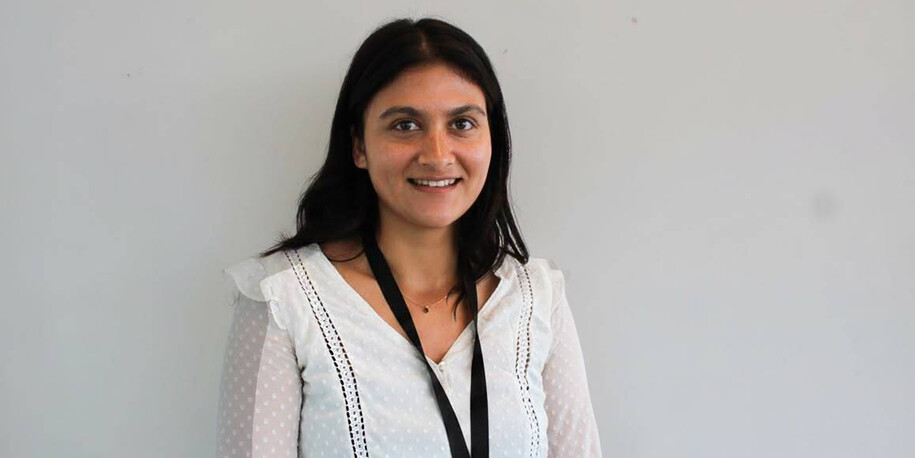
From rural New Zealand to the heart of the football industry, Sakara deMello-Norminton’s journey to the beautiful game has been anything but ordinary. Growing up, her strong connection to football came through her dad, a dedicated Liverpool supporter, even when playing opportunities were hard to find.
Now, Sakara is turning that lifelong passion into a career. This Members in Focus feature goes behind the scenes to profile our newest team member, who joined Women in Football this June as Partnerships Manager. We spoke with her about her global move, her legal background, and how she is settling into her new role.
A Scouser in New Zealand
Growing up, football was never just a sport for Sakara – it was a key part of her childhood imported from halfway across the world. Raised in New Zealand, her earliest memory of the game is captured in a cherished family photograph. In it, Sakara, her dad, and her grandad are fully decked out in bright red Liverpool kits, right down to the socks. Her father, who was born and raised in Liverpool, brought his love for the club with him to New Zealand. "He's a huge Liverpool supporter," Sakara recalls. "So, I spent a lot of my childhood dressed head to toe in Liverpool kit."
Sport is very much woven into everyday life in New Zealand. “I think there was a huge focus on being active, being outdoors, and being part of a team,” Sakara adds. “Most people see how important sport is in building confidence, resilience, and teamwork, which in turn is very transferable when it comes to education and the early steps in your career.” However, as a big football fan, Sakara soon noticed a lack of footballing opportunities in the local sports landscape.
Despite the distinct lack of local infrastructure for young girls who wanted to play football, Sakara got her main dose of football at home, where her father made sure the game was accessible, often leading football matches at birthday parties. "Football in New Zealand isn't nearly as prominent as in the UK," Sakara explains. "It was much more rugby and netball rather than football." Even among boys, the game had little traction.
Although Sakara’s Mum encouraged her into ballet, leading to a funny photo of Sakara wearing a tutu over her Liverpool strip, it always kept coming back to football. “Growing up, for myself and my two sisters, my dad never told us that football wasn't for us.” Football became a huge part of the household and, because of the vast time zone differences, following Liverpool meant waking up in the early hours to the sound of her dad's passionate screams at the television. “He always encouraged us to get involved as much as we could,” Sakara adds.
Looking back, Sakara credits her relationship with the sport to one central figure. "I think my father’s passion for football is probably my earliest connection to football," she reflects. It was a childhood that fostered a lifelong love of the beautiful game.

New chapter, new connections
In 2023, Sakara left behind her rural life in New Zealand to move to London. While moving across the world is a daunting prospect for most, for Sakara, it was an impulsive leap of faith. With less than two weeks between booking her flights and packing up her life, she left a tight-knit community to chase a new adventure, knowing she would need a welcoming community to thrive in the UK.
Arriving in London on Valentine’s Day morning, the reality of Sakara's relocation hit home. Knowing a support system would be vital in a new country, she had already joined a New Zealanders in London Facebook group. Her initial plan was to dive straight into the group's Valentine's Day netball tournament, but severe jet lag intervened. She fell asleep and slept right through the event. “I completely missed it! But the next day, I signed up for social football in the park. I went along on my second day in London and, luckily, met my now best friend, Victoria.”
Reflecting on her move, Sakara hails the importance of sporting communities where she met most of her close friends in England. "Sport gave me that connection, that community, and also that belonging," she shares. "When you're so far from home, to have those people is really important." Sakara’s experiences serve as a powerful reminder of how shared activities and sport can act as the ultimate connector, turning a new and unfamiliar city into a place where you truly belong.

Charitable roots
During her first few months in England, Sakara worked in contract law, building on her previous experience in mediation and family law in New Zealand. “I originally wanted to get involved in law because I wanted to know how to support and advocate for people, particularly those in vulnerable situations,” Sakara explained, noting how her mother’s work with refugees and unhoused people in New Zealand influenced her. “I think I got my charitable streak from my mother. I really enjoy working with vulnerable people, helping them understand their rights, and securing positive outcomes for them.”
After a while, Sakara found life in the niche world of sports contracts a little dull. It did, however, inspire her to merge her passions. Realising she needed a career pivot, she pushed past the imposter syndrome to apply for a role at the charity Women in Sport – an organisation she hadn't even heard of at the time. “I didn't move all the way across the other side of the world to do the exact same thing and work the same long hours,” she said. “I just thought, if I can use some of the relationship-building skills from my mediation law days and use them in a sector I'm passionate about, maybe it could make for a really fun job. And it does.”
For Sakara, the ultimate bridge between her past and present careers is empathy. “Being able to show empathy and understanding, and to communicate well to get the best out of someone – I think that's vital in partnerships.”

Transfer news
Following a successful spell at Women in Sport, Sakara joined Women in Football in June 2026, marking the next step in a career dedicated to empowering women through sport. “I'm grateful to be able to work in this space," Sakara said. "I don't think a lot of people can say that their personal passion aligns so closely to their profession.”
Sakara credits her previous line manager at Women in Sport, Kitty Cahill-Evans, with giving her the boost to apply for the role. Having moved all the way from New Zealand, working in a charity was a completely new environment for her. "Kitty created this environment for me where I felt comfortable asking questions," Sakara says. "This helped me learn and develop." Instead of feeling forced to figure things out by herself, Sakara learned that her hesitation to seek guidance was holding her back. "She taught me that asking for help was actually a strength and not a weakness," she notes, adding that Kitty showed her how a mentor can also double as a great friend. Ultimately, this mentorship shaped her path to join Women in Football. "I don't think I would have got the role at WIF or even have thought of applying for a role in football if I hadn't met Kitty and she hadn't pushed me."
In her new role as Partnerships Manager at WIF, Sakara spoke about being able to flourish in a role that delivers such positive social impact. “I've experienced firsthand the positive impact that sport can have," she explained. "It’s hugely important to me and I feel very lucky.”
A priority for Sakara is raising awareness about the industry's diverse career paths for other women. “While I was in New Zealand, I had no idea that communities such as Women in Sport or Women in Football existed," she noted. "I didn't realise you didn't have to be an elite athlete to work in sport. Being able to help create those opportunities feels like a real privilege.”
This commitment to inspiring the next generation is nothing new. Looking back at a BBC Bitesize panel she spoke on in 2025, Sakara joyfully recalls talking to young girls about all the roles available in football and watching their eyes light up. “I've never had someone tell me they want my job and ask how to get into the industry," she said. "I just remember sitting there and thinking how exciting it is to be part of a community where people are this passionate and open to these conversations.”

Future aspirations
The rapid growth, commercial momentum, and expanding opportunities within the football industry were the primary drivers behind Sakara’s decision to transition into football partnerships, and she has big plans to grow into the role. “I would love to build exciting new partnerships and demonstrate the tangible impact of those relationships,” she noted.
Beyond this, Sakara emphasised the vital role of diverse communities such as WIF. “Diversity brings so many different perspectives, experiences, stories, and ideas,” she said. “I believe gender-diverse spaces tend to be more innovative, as they more accurately represent the broader community.” She highlighted that creating environments where individuals feel valued and empowered is essential for sustained success.
Alongside this, Sakara stressed the importance of celebrating milestones. Working in a space constantly fighting for change makes it easy to forget how far the industry has come. For those looking to break into the sector, even without a traditional sports background, Sakara offered these powerful closing thoughts: “Be passionate, be curious, be willing to learn. If you're super passionate, those opportunities will come.” This final reflection, built from personal experience, cements the message that sport is a space for anyone with the drive to learn.
Share this article

Sport gave me connection, community, and belonging."
Sakara deMello-Norminton
Partnerships Manager, Women in Football